
What is Online Reputation Management?
digitalrepu are the worlds leading Online Reputation Management (ORM) company

What is online reputation management?
Reputation management is about taking control of how and what others think of a brand, a small business, a business leader or individual.
The reputation of a business is shaped by various factors, including online reputation, social media presence, media coverage, and any negative feedback.
While reputation can be shaped by traditional media like TV or radio, people are more likely to gain insight from online content, including negative material.
The benefits of online reputation management
Here are just some of the benefits of effective reputation management:
Credibility
positive links, comments and high visibility online makes you credible in the eyes of customers, stakeholders, employees, influencers and peers.
Trust
people trust a company, brand or person with a good reputation.
Profit
companies with higher star-ratings, reviews and positive content and PR get more business.
Talent
brands with a positive reputation earn better employees.
Taking control of your online presence enables you to present the best possible image of your business, brand or senior figures to the online community.
As an individual, you’ll also control what people see when they search for you, and for businesses, you’ll help prospective customers notice you before your competitors and convert them into sales.
Google yourself, do you like what you see? It is true and fair?
The importance of online reputation management
The Internet, and more specifically what people say about you online, is perhaps the single biggest influence on the success of you, your business and brand.
New customers browsing Google for services will take notice of what people are saying about you and your brand.
This remains true for businesses of all sizes and across every industry sector in the world.
When people Google your name, what they see in the results collectively influences their perception of you. In other words, the perception of strangers browsing the Internet is your online reputation.
Managing your reputation is about taking control of the bigger picture.

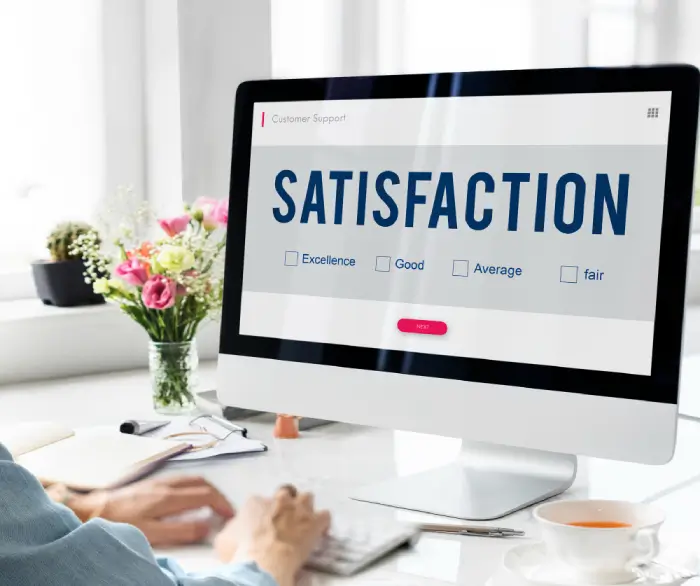
Why online reputation management matters for businesses and brands
The more search engine results you ‘own’ on the first two pages of an online search the better for your reputation.
This is because it enables you to control what people see and influence their decision-making process. As well as your website, you want them to see positive reviews (which are very important for trust and credibility), social media, profiles and PR.
A study conducted by Chitika reveals that the front page of a Google-branded search for your firm’s name attracts 91.5% of traffic from an average search.
Credibility, trust, profit and attracting talent are all linked to your search results.
Google yourself, do you like what you see? It is true and fair?
A comprehensive approach to reputation management is key
Reputation management today includes offline and online reputation management strategies.
Businesses and individuals who understand the importance of their online reputation often choose to work with a reputation management company. This serves to ensure that their online reputation is in hand and is under a professional reputation management plan.
Just think about how much information there could be out there about you and your brand. From review sites to customer feedback, any online customer interactions to negative search results, there are so many potentially actionable insights to be managed.


Your reputation matters
People search people, whether they’re looking for a potential new hire, or want to know more about you before choosing to do business with you.
It’s in our nature to Google names before making purchasing decisions, and sometimes just to see what other customers think. Depending on your profile, who you are and why people might be interested, they may go as far as your personal social media profiles.
At the end of the day, the content people see in the first 2 pages of an online search forms their opinion.
And you may well feel that this opinion is either unfair or unwarranted, which is why controlling your online reputation is so important.
Do you need a reputation management company?
"It takes 20 years to build a reputation and five minutes to ruin it." - Warren Buffett
It is possible for individuals to take a DIY approach to their reputation management online. And perhaps for those of us without much at stake, this is enough. Think of your Instagram feed and the filters you might select, or your LinkedIn page.
These are examples of the DIY reputation management that can just about do for some people. However, anyone who has a higher profile – or wants to create one – working with the experts is the way to go.


Take strategic control of how you're seen
It is possible for individuals to take a DIY approach to their reputation management online. And perhaps for those of us without much at stake, this is enough. Think of your Instagram feed and the filters you might select, or your LinkedIn page.
These are examples of the DIY reputation management that can just about do for some people. However, anyone who has a higher profile – or wants to create one – working with the experts is the way to go.
A reputation management company can carry the reputational load
Many businesses overlook the need to tend to their reputation management side, busy as they are with other aspects of managing the process of staying afloat.
This is unsurprising when we consider the fact that to manage a reputation takes knowledge, insight, tools and time effectively and usefully.
How many businesses have the manpower to stay on top of review sites, online profiles, Google reviews, Wikipedia changes, website updates, social media noise and everything else out there that combines to form a reputation?
There is no single approach to good reputation management as it depends on specific needs of the business, the industry sector, target demographic, media coverage, profile of those involved and much more.

Whether you want to manage your personal online reputation or ensure reputation management is covered for your business needs, these facts will be eye-opening.
- Google controls 92% of all search engine traffic.
- When someone Googles your company’s name, the first page of the results attracts 95% of traffic.
- 93% of online experiences begin with a search engine.
- Furthermore, 75% of people never scroll past the first page of search engines.
Search results can include everything from review sites to articles, blogs, content found on websites, marketing adverts, industry sites and any other coverage of your brand or business.
Let’s turn specifically to the reviews that customers leave online. Here’s how much these can affect a business.
- 93% of people say that online reviews and review sites impact their buying decisions.
- 95% of people admit reading online reviews before visiting a business.
- 89% of consumers are ‘highly’ or ‘fairly’ likely to use a business that responds to all of its online reviews.
- Up to 84% of consumers noted that reviews were important in their purchasing decisions.
- 58% of consumers also say they are actually willing to pay more for the products of a brand with good reviews.
- It’s safe to say that neglecting to manage online reputation can be critical in terms of its impact on your business. Never underestimate how much customer experience matters.
The stats don’t stop there, however. We’ve also found the following:
- 58% of consumers need high star rating before theychoose to use a business.
- Nearly 75% consumers believe that writtenreviews describe positive experience.
- Every 1* increase in Yelprating means a 5 to 9% increase in revenue.
- 75% of businesses say that online reviews, comments, press and forum posts are important to the financial and reputational status of their business.
- 46% of companieshave been damaged or are worrying about negative press coverage, (up 29% since 2014).
- 1 in 3 businesses saynegative search results has already damaged their business.
- 1 in 3 worry about the impact of negative commentson their business and its value in future.
- 1 in 3 businesses say negative posts on social networkspose the greatest reputation threat.
- Negative contenthas cost 1 in 20 UK companies more than £500,000, 5% have lost £100,000-£500,000, 1 in 7 have lost up to £50,000.
- 51% of businesses say that their company has been negatively affected by unsubstantiated online reviews or targeted by trolls.
- 70% of consumerswill avoid buying a product if they don’t like the company behind it.
- 1 in 5 companies surveyed by Igniyteare unhappy with the way they’re portrayed on their Google page 1.
An effective reputation management strategy will ensure that positive search results on page 1 of Google are highly visible.
Positive reviews, content, brand coverage, marketing initiatives and website coverage all combine to influence a business, company, or individual reputation. And that’s why it absolutely pays off to spend time and money to manage the process of effective reputation management. Here’s what we found:- 99% of consumers use the internet to find information about a local business and 21% do it every day.
- 93% of customerscomparison shop for every purchase, and don’t stick to one platform.
- Executives say that, on average, 49% of the reputation of their company will post about a positive interaction i is attributable to their CEO’s reputation.
- 71% of consumers who have had a positive experience with a brand are likely to recommend the brand to their friends and family on social media.
- Search results also impact recruitment
- 90% of recruiters use LinkedIn to fill company job openings.
- 73% of recruiters successfully place people identified via social media platforms.
- 71% of hiring managers agree that social media profiles are an effective way to screen candidates.
- 9% of companies that don’t already recruit with social media are planning to.
- 54% of companies have eliminated a candidate based on their social media feed alone.
In today’s manic online world, reputation management takes place online for the most part. This is where you should concentrate marketing efforts to improve yours, whether for a business or to curate your individual reputation.
There are endless stats that show reputation has a direct impact on sales and marketing for any business, and as such, it’s essential to survive.
While it’s impossible to control what people think, it is possible to control what they see on the Internet. This goes on to inform the way they think, and will impact their view of products, services, and businesses.
By working with a specialist reputation management company and using effective strategies and the right reputation management software, you can ensure that positive content about you and your brand are easily found online. And the better shape your reputation is in, the more impressive your conversion rate.
Precisely because individuals become synonymous with a business, brand or idea, when people Google your name, they will link all of these together.
Not only will possible customers Google your name if they know it, they will then read reviews of your business, they’ll see what people are talking about on social media about your brand and they may well see your own social media channels.
There are so many different channels of communication open all at the same time, that it’s critical to take charge of what people see if they Google your name. Taking an active stance to ensure that the best side shows easily online is vital for your personal and business success.
It’s also worth noting that if you have absolutely no online presence at all, this can also negatively impact your reputation. Creating and curating your reputation is, hands down, the best way to control how your own reputation.
Google yourself, do you like what you see? It is true and fair?
Not only can a reputation management company bring a thorough and provable brand reputation management plan to the table, but they also bring experience, insight and the right reputation management software.
Remember that reputation management is about creating and boosting the good content, whether that’s through judicious search engine optimization, it’s also about protecting you and your brand from any unwanted negative content online.
Reputation management exists because of our collective tendency to hone in the bad over the good.
People are people, and generally tend to believe, spread and share the negative over the positive. This is a fact of human nature.
And, of course, splashy headlines get more attention, more clicks and more money for the platform they’re posted on. This is how an error on one platform, such as Twitter, can take on a life of its own and quickly go viral among the masses and potentially cause possible customers to look elsewhere.